
Why taps drip: washers, cartridges and scale
Older style taps with separate hot and cold handles use a rubber washer that presses against a seat to stop the water. Over time the washer hardens and the seat wears, so water slips past. People often turn the handle harder to stop the drip, which wears both parts faster. Mixer taps use a ceramic cartridge instead of a washer. Cartridges last a long time but can crack, wear or jam with debris and scale. Brisbane's water leaves mineral deposits in cartridges, aerators and spouts, which can cause stiffness, drips and weak flow. Leaks around a handle often come from worn O-rings or seals, while water under the sink usually points to a failed flexible hose or a loose connection.
Fix it or replace it? How we decide
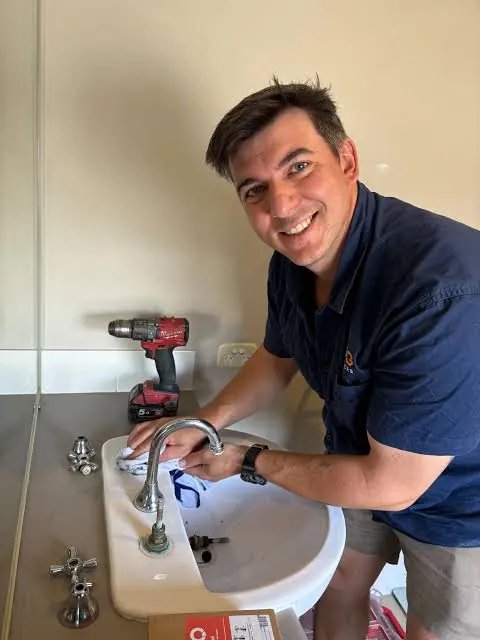
Many taps can be repaired. Replacing a washer, reseating a worn tap, fitting a new cartridge or changing seals often brings a tap back to full working order. We check whether parts are available for your tap, because some older or imported models don't have spares. A repair keeps the tap you already like and is usually the quicker option, especially for quality tapware that was built to be serviced.
Replacement makes more sense when the tap body is cracked or corroded, parts are no longer made, or repairs keep failing. It is also the time to choose a tap that suits how you use the space, such as a pull-out kitchen mixer or a basin mixer with a longer reach. We give you both options and prices in writing so you can choose. We also check the tap body and seat for corrosion or cracks, because a new washer on a damaged seat will soon drip again.
Installing new taps and mixers
Fitting a tap properly involves more than screwing it on. The connections must suit your pipework, the tap must be secured so it doesn't twist, and flexible hoses must be the right length and quality. Wall-mounted taps and mixers often need changes behind the wall, and switching from two taps to a mixer can mean reworking the fittings. Done properly, a new tap sits firm and stays leak-free.
We install tapware that is WaterMark certified, which shows it meets Australian requirements for plumbing products. If you buy your own taps, check for the WaterMark before you buy. We are happy to fit customer-supplied tapware, and we will let you know if a product isn't suitable. We also check the hoses and isolation valves under the sink and replace any that are worn while the water is off.
Outdoor taps, laundry taps and the ones people forget
Garden taps take a beating from sun, hoses and knocks, and they often drip for months before anyone acts. A leaking outdoor tap can also be a sign of high water pressure. Laundry taps that feed a washing machine stay under pressure all the time, so their hoses and connections should be checked regularly. Hose taps should have a vacuum breaker or similar backflow protection, because a hose left in a bucket, pool or chemical sprayer can draw dirty water back into the pipes. If yours doesn't have one, we can fit it while we are there.
Tap work and Queensland's licensing rules
In Queensland, plumbing work must be done by a person holding the appropriate QBCC licence. Replacing taps, installing mixers or changing pipework is plumbing work, and using an unlicensed person can create problems with leaks, insurance and compliance. As licensed and insured plumbers, we do the work to the required standard, and our workmanship guarantee covers what we do. If someone offers to swap your tapware cheaply without a licence, it is worth asking who will stand behind the work if it leaks.
Keeping taps working longer
Turn taps off gently. Overtightening crushes washers and wears the seat. Clean aerators every so often by unscrewing them and rinsing out grit and scale. Look under sinks every few months for damp, rust on hose fittings or water stains, and replace braided hoses that show wear. If a tap starts dripping, get it repaired early. A small drip is a simple fix, while a worn seat or corroded body costs more.