
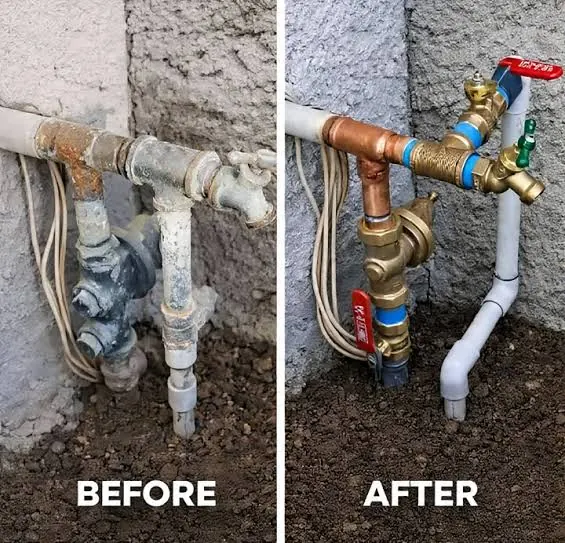
Where hidden leaks usually start
Most concealed leaks begin at a joint, a fitting or a weak section of old pipe. Copper joints can work loose as pipes expand and contract with hot water. Older galvanised steel pipes rust from the inside until pinholes appear. Braided flexible hoses under sinks and toilets wear out and can split with little warning. Shower recesses leak through failed grout, sealant or waterproofing, and the water travels a long way before it shows.
Toilets are another common culprit. A worn flush valve lets water trickle from the cistern into the pan all day, which you rarely notice but the meter does. Irrigation lines, garden taps and pipes to outbuildings also leak underground. Each source needs a different repair, so finding the exact spot matters more than guessing. A slow leak can also hide behind cabinetry or under a bath for a long time before the damage becomes visible.
How we track a leak down without pulling the house apart
We start with the simple tests. With all fixtures off, we read the water meter to confirm there is a leak and get a sense of how fast it is running. Then we isolate parts of the system, such as the hot water side, the cold water side, toilets and outdoor lines, to narrow down where the water is escaping. Pressure testing individual sections shows which run is losing water.
Once the search is down to one area, we look for physical clues like moisture, warmth and sound to pinpoint the spot. We only open a wall, floor or patch of ground where the evidence points, which keeps repair and patching to a minimum. If the leak is in a drain or sewer pipe rather than the water supply, our CCTV camera inspection lets us see inside the pipe and find the crack or failed joint.
Your side of the meter or Urban Utilities' side?
Urban Utilities runs Brisbane's water and sewer network, including the mains in the street. The property owner is usually responsible for the pipes on their side of the connection point, which for water supply is generally at the meter. That means a leak between the meter and your house, or anywhere inside it, is normally yours to fix. If water is bubbling up in the footpath, the street or before your meter, contact Urban Utilities first, because that part of the network is theirs. If you aren't sure which side the leak is on, we can check and tell you plainly, so you don't pay for work that isn't your responsibility.
Brisbane homes and the leaks they tend to have
The style of house changes how a leak behaves. In a Queenslander on stumps, most pipework runs under the floor where it can be seen and reached, so leaks are often easier to find and cheaper to repair. Slab-on-ground homes are different. Pipes run through or under the concrete, and a leak can sit hidden for months, sometimes showing up only as a warm floor or a high bill.
Brisbane's reactive clay soils swell when wet and shrink in dry spells, and that movement puts stress on buried pipes and joints. Heavy summer storms can also confuse the picture, because roof water, overflowing gutters and failed stormwater pipes cause damp walls that look like a plumbing leak. Part of our job is ruling those causes in or out so the right problem gets fixed.
When a leak needs a plumber today
Some leaks can wait a few days. Others can't. Call us straight away if water is coming through a ceiling, pooling near power points or light fittings, running under flooring, or if the meter is spinning quickly. Turn the water off at the main stop valve, usually beside the meter, and switch off power to any wet area if it is safe to do so. We work 24/7, so you don't have to wait until morning for help.
Checking for a leak yourself first
You can do a basic leak test in a few minutes. Turn off every tap, appliance and irrigation system, then note the reading on your water meter. Wait an hour without using any water and check again. If the numbers have moved, water is escaping somewhere. To test a toilet, put a few drops of food colouring in the cistern and wait. Colour in the pan without flushing means the flush valve is leaking. To reduce the chance of leaks, replace braided hoses showing rust or fraying, fix dripping taps early and keep an eye on your water bills for sudden jumps. Catching a small leak early is always cheaper than repairing the damage a long-running one leaves behind.