
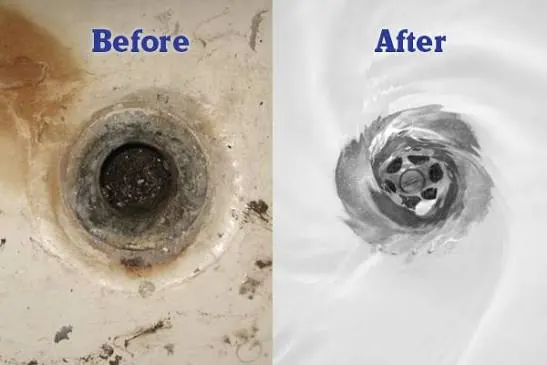
Drain cleaning versus clearing a blockage
Clearing a blockage punches a hole through whatever has stopped the water. It gets things moving, but it often leaves most of the build-up stuck to the pipe walls. Drain cleaning goes further. The aim is to scour the inside of the pipe back to its full width so waste has room to pass and nothing to catch on. That is the difference between a drain that works for now and one that keeps working.
We usually recommend a proper clean after a blockage has been cleared, when you buy an older home, or when a property has a history of slow drains. Restaurants, cafes and other businesses with commercial kitchens also tend to benefit from regular cleaning, because grease builds up much faster under heavy daily use than it does in a family home.
What builds up inside your pipes
Kitchen drains collect fats and oils that seem liquid when hot but set as they cool. Add coffee grounds, rice and food scraps, and the pipe slowly narrows into a waxy tube. Bathroom drains gather hair, soap scum, toothpaste and conditioner, which bind together into stringy clumps. Laundry drains carry lint and fabric fibres, plus detergent residue that clings to the pipe walls and gives the next load something to stick to.
Brisbane's water carries some dissolved minerals, and in certain areas these can leave scale on fittings and inside pipes over time. Scale is rarely the main cause of a blockage on its own, but it roughens the pipe surface so grease and hair grip more easily. Outside, silt washed in during storms and fine roots growing through joints add to the mix.
The tools we use to clean drains properly
Different build-ups need different tools. For soft material close to the fixture, a drain machine with the right cutting or brush head does the job without fuss. For grease, silt and long runs of pipe, hydro-jetting is usually more effective. A high-pressure water jet travels along the line, cutting through build-up and flushing the debris downstream, so the pipe walls come out clean rather than just open.
Where we suspect damage or tree roots, we put a CCTV drain camera down the line before and after cleaning. The before footage tells us what we are dealing with. The after footage confirms the job is done and shows whether there are cracks, sags or displaced joints that need attention. You can watch the footage with us and keep a copy for your records.
Is it a cleaning job or a repair job?
Cleaning only helps if the pipe itself is sound. In older Brisbane suburbs, many homes still have clay sewer lines with joints that move as the reactive soil swells and dries. Roots find those gaps and keep coming back after every clean. A camera inspection shows whether the pipe is in good shape or whether a crack, collapse or root-infested joint needs fixing. If repair is needed, we explain the options, including excavating a section or relining the pipe from the inside, and give you a written price for each.
Looking after your drains between cleans
Simple habits make a big difference. Scrape plates into the bin, wipe greasy pans before washing them, and run hot water after using the kitchen sink. Use a strainer in the sink and a hair catcher in the shower. Avoid pouring paint, cement wash or building waste down any drain, and never put wipes in the toilet, even the ones sold as flushable.
Outside, check gully grates and stormwater pits after big storms and clear away leaves and soil. If you have large trees near your sewer line, ask us about checking the line with a camera so roots can be dealt with early. Skip the supermarket chemical cleaners. They rarely remove build-up properly and can be hard on older pipes and seals.